
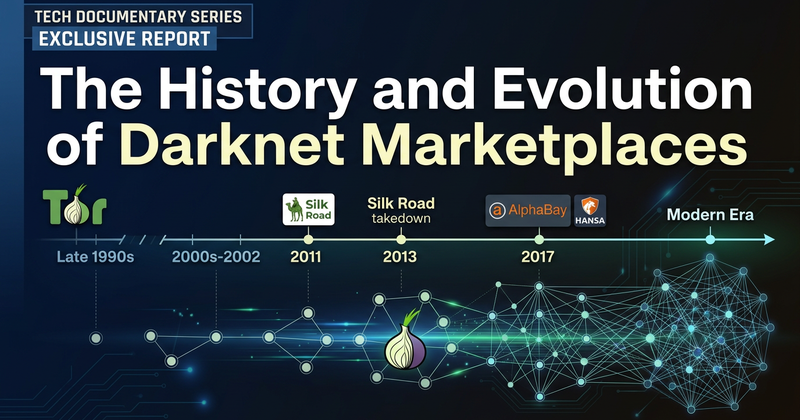
The history of darknet marketplaces is a story of technological innovation, law enforcement pressure, and the persistent demand for privacy-preserving commerce. From the launch of the first major platform in 2011 to the sophisticated, security-conscious markets operating today, the ecosystem has evolved in direct response to both the capabilities of its adversaries and the needs of its users.
The Silk Road Era (2011-2013)
Silk Road, launched in 2011, was the first darknet marketplace to achieve widespread recognition. Operating on the Tor network and accepting Bitcoin, it demonstrated that pseudonymous e-commerce was technically feasible at scale. At its peak, Silk Road was processing millions of dollars in monthly transactions across thousands of product listings. The FBI's seizure of the platform in October 2013 and the arrest of its operator marked the first major law enforcement action against a darknet marketplace, and catalysed the development of more security-conscious successors.
The Post-Silk Road Expansion (2013-2017)
The years following Silk Road's closure saw rapid platform proliferation. Agora, AlphaBay, and Hansa Market emerged as major platforms, each implementing progressively stronger security measures. This period also saw the first widespread adoption of multi-signature escrow and improved vendor verification systems. Law enforcement operations continued, most notably the simultaneous takedown of AlphaBay and Hansa Market in 2017, which demonstrated the ability of international law enforcement agencies to coordinate multi-platform operations.
Maturation and Specialisation (2017-2022)
The period following the 2017 takedowns saw the market fragment into smaller, more security-focused platforms. Dream Market, Wall Street Market, and others emerged and fell in succession. The era also saw the first major platforms to prioritise Monero over Bitcoin, reflecting growing user sophistication about cryptocurrency privacy. The White House Market, which operated exclusively on Monero and required PGP for all communications, became a notable example of a market that prioritised security over convenience.
The Current Landscape (2022-2026)
Contemporary darknet marketplaces have incorporated lessons from a decade of security failures and law enforcement operations. V3 onion addresses, mandatory PGP, multi-signature escrow, JavaScript-free interfaces, and Monero-first payment policies are now standard features of the most reputable platforms. TorZon Market sits within this mature phase of the ecosystem, implementing established best practices and continuing to develop new security and usability features.
The history of darknet marketplaces reflects a continuous technological and operational arms race, with each generation of platforms responding to the vulnerabilities exposed in the previous one.